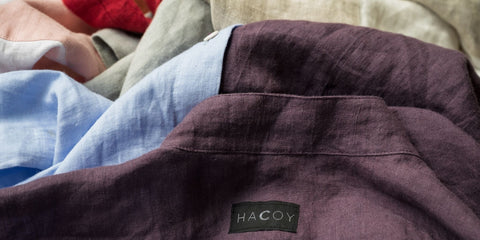
Linen 101: The Science Behind Nature’s Original Performance Fabric
What is Linen?
Linen is a textile made from the fibers of the flax plant (Linum usitatissimum). It is one of the oldest textiles in the world, with fragments dated back to 30,000 BC. Historically, it was valued so highly that it was used as currency in ancient Egypt and for the sails of Roman ships due to its immense strength.
1. The Structure: The Hollow Core
The defining characteristic of the flax fiber is its structure. Unlike cotton, which has a solid, flat ribbon-like structure, the flax fiber is polygonal and hollow.
This hollow core allows air to circulate within the fiber itself.
- Thermoregulation: This air permeability allows heat to escape from the body rapidly, making linen highly conductive to heat (5 times more than wool, 18 times more than silk).
- Insulation: In cooler conditions, the same hollow air pocket traps body heat, providing natural insulation.
2. Hydrophilic Properties (Moisture)
Linen is highly hydrophilic (water-loving). It can absorb up to 20% of its dry weight in moisture without feeling damp to the touch.
- Wicking: The pectin in the fiber allows for rapid moisture absorption and equally rapid evaporation. This prevents the "wet cling" effect common in cotton or synthetics, keeping the skin dry.
3. Durability & Tensile Strength
Linen is recognized as the strongest natural fiber.
- Tensile Strength: It is approximately 30% stronger than cotton.
- Wet Strength: Unique among natural fibers, linen becomes stronger when wet. This makes it exceptionally durable against repeated washing cycles.
- Longevity: While cotton fibers break down over time, linen fibers tend to soften without losing structural integrity, often lasting decades.
4. Hygiene & Hypoallergenic Traits
Linen also has qualities that matter for sensitive skin.
- Antibacterial: The fiber structure and lack of moisture retention make it difficult for bacteria and dust mites to breed.
- pH Neutral: Linen is compatible with the skin’s natural pH, making it suitable for those with dermatological sensitivities.
5. Origin and Certification
- Origin: Flax grows naturally in European climates. The flax in HACOY linen is grown in France, Belgium and the Netherlands.
- Certification: Our flax is European Flax certified.
- Fabric: Our linen fabric carries OEKO-TEX Standard 100 (2017OK0319).
Conclusion
Linen represents the intersection of durability and biology. Its hollow structure provides superior thermal regulation, while its tensile strength ensures longevity. It remains the reference point for natural performance textiles.