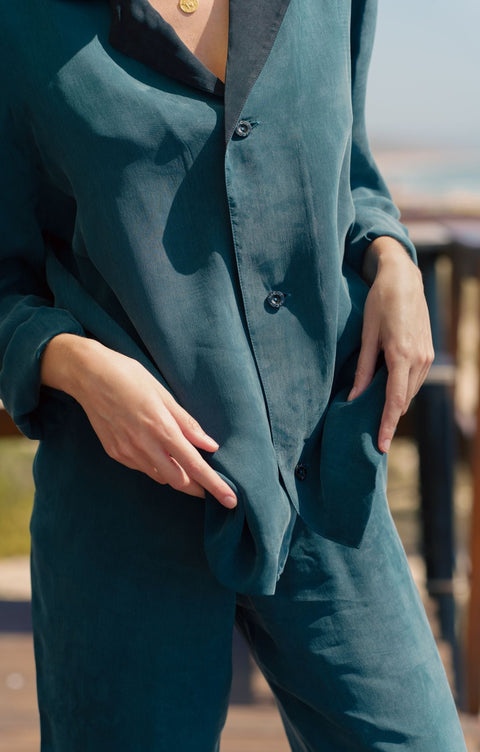
Cupro: The Regenerated Cellulose Fiber
What is Cupro?
Cupro (Cuprammonium Rayon) is a "regenerated cellulose" fiber. It sits between natural and synthetic. It is not grown like a plant, but it is not a plastic like polyester. It is made from Cotton Linter—the fuzzy, ultra-fine fibers that stick to the cotton seed after the main cotton is ginned. Historically, this "linter" was a waste product dumped by the cotton industry.
1. The "Closed-Loop" Production
Cupro is produced by dissolving the cotton linter in a solution and spinning it into fiber.
- Zero Waste: Modern Cupro production (specifically by Asahi Kasei in Japan) operates on a "closed-loop" system. This means nearly 99.9% of the chemicals and water used in the process are recovered, recycled, and reused. They are not dumped into the environment.
- Upcycling: It transforms a pre-consumer waste product (cotton linter) into a luxury textile.
2. The Feel ("Vegan Silk")
Cupro is often called "vegan silk" because it mimics the hand-feel of silk perfectly.
- Smoothness: The fibers are perfectly round and smooth (unlike cotton, which is twisted). This gives it a slippery, cool-to-the-touch texture that glides over the skin.
- Drape: It has a fluid, heavy drape similar to sandwashed silk, making it ideal for dresses and lining.
3. Moisture Control
Cupro is highly breathable and moisture-wicking. It releases moisture into the air rapidly, reducing the "stickiness" often felt with synthetic linings. It is also anti-static, meaning it won't cling to your legs in winter.
4. Biodegradability
Because the base material is pure plant cellulose (cotton), Cupro is 100% biodegradable. Unlike polyester or nylon, it will break down naturally in soil, leaving no microplastics behind.
Conclusion
Cupro represents the future of circular fashion: Taking a waste product and using technology to transform it into a luxury material that rivals silk, all while maintaining a biodegradable footprint.