Cupro: Die regenerierte Zellulosefaser
Was ist Cupro?
Cupro (Cuprammonium-Rayon) ist eine regenerierte Zellulosefaser. Sie liegt strukturell zwischen Natur- und Synthetikfasern. Sie wächst nicht wie eine Pflanze, ist aber auch kein Kunststoff wie Polyester. Hergestellt wird sie aus Baumwoll-Linters – den feinen, flauschigen Fasern, die nach dem Entkörnen der Baumwolle am Samen haften bleiben. Früher waren diese Linters ein Abfallprodukt der Baumwollindustrie.
1. Die „geschlossene“ Produktion
Cupro wird hergestellt, indem die Baumwollfasern in einer Lösung aufgelöst und anschließend zu Fasern versponnen werden.
- Abfallfrei: Die moderne Cupro-Produktion (insbesondere von Asahi Kasei in Japan) basiert auf einem geschlossenen Kreislauf. Das bedeutet, dass nahezu 99,9 % der im Prozess verwendeten Chemikalien und des Wassers zurückgewonnen, recycelt und wiederverwendet werden. Sie gelangen nicht in die Umwelt.
- Upcycling: Dabei wird ein Produktionsabfallprodukt (Baumwollfasern) in ein luxuriöses Textil verwandelt.
2. Das Tragegefühl („Vegane Seide“)
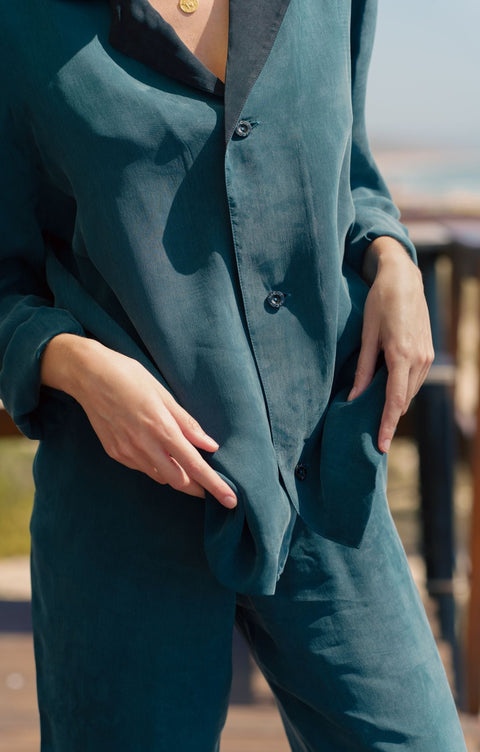
Cupro wird oft als „vegane Seide“ bezeichnet, weil es sich wie Seide anfühlt – und zwar perfekt.
- Geschmeidigkeit: Die Fasern sind perfekt rund und glatt (im Gegensatz zu Baumwolle, die verzwirnt ist). Dadurch fühlt sich das Material geschmeidig und kühl an und gleitet sanft über die Haut.
- Fall: Der Stoff hat einen fließenden, schweren Fall, ähnlich wie sandgewaschene Seide, wodurch er sich ideal für Kleider und Futterstoffe eignet.
3. Feuchtigkeitsregulierung
Cupro ist hoch atmungsaktiv und feuchtigkeitsableitend. Es gibt Feuchtigkeit schnell an die Luft ab und reduziert so das oft bei synthetischen Futterstoffen auftretende „Klebrigsein“. Zudem ist es antistatisch, sodass es im Winter nicht an den Beinen klebt.
4. Biologische Abbaubarkeit
Da das Basismaterial aus reiner Pflanzenzellulose (Baumwolle) besteht, ist Cupro zu 100 % biologisch abbaubar . Im Gegensatz zu Polyester oder Nylon zersetzt es sich auf natürliche Weise im Boden und hinterlässt keine Mikroplastikpartikel.
Abschluss
Cupro verkörpert die Zukunft der Kreislaufwirtschaft in der Mode: Aus einem Abfallprodukt wird mithilfe von Technologie ein Luxusmaterial hergestellt, das mit Seide konkurrieren kann – und das alles bei gleichzeitiger Einhaltung einer biologischen Abbaubarkeit.